The art form and the practical side
Kandyan dance: what you see and hear
What Kandyan dance is, what the drums, costumes, masks and fire mean, and the practical side of a Kandy show: timing, dress, getting there and back.
Check dates and availability ↗Quick answer
Kandyan dance is the dance tradition of Kandy and Sri Lanka's central hills, performed to drums and cymbals in beaded costume and metal-fronted headdresses. In a Kandy show you see it alongside southern mask dances and fire acts. Allow for a stage show of about an hour, a ride arranged for afterwards, and the earlier starts announced around the Esala Perahera. The show's site gives no dress code, but the Temple of the Tooth does not admit shorts or sleeveless tops.
What Kandyan dance is
Kandyan dance is the name for the dance forms native to the Kandy region in Sri Lanka's central hills, known as Udarata, and they have since spread across the country. It is traditionally performed to percussion alone, and it is built around the geta beraya, a drum used only in Kandyan dance. It is regarded in Sri Lanka as a sacred art, and it is described as the country's primary cultural export, which is why stage versions of it are so widely seen. A show in Kandy presents it alongside other Sri Lankan dances, so what you see is Kandyan dance and its neighbours.
Where it comes from
Legend traces the dance to the Kohomba Kankariya, a ritual named for the deity Kohomba. Under the Kandyan kingdom, dancers formed a separate caste tied to the Temple of the Tooth and its annual procession. The tradition declined in the British period, after Kandyan kings stopped supporting dancers, and it was later revived and adapted for the stage; Chitrasena Dias adapted it for the stage in the 1970s, and the Chitrasena Dance School is described as one of the largest schools for the form. Ves dancers were first invited to perform outside the precincts of the Kankariya temple at the Kandy procession only toward the end of the 19th century.
The main forms
Writers on the tradition describe several forms. The one most visitors see is Ves, which the Lake Club lists as Ves Natuma. The others are described below so you can recognise what you are watching, though a show may not name them. This list follows the Wikipedia article on the tradition and is a guide to the vocabulary, not a programme.
- Ves: the most popular form, from an old purification ritual, traditionally danced only by men
- Naiyandi: danced in the early preparations for the Kohomba Kankariya, in Ves costume without the headdress
- Udekki: named for a small hourglass-shaped hand drum, which the dancer plays while singing
- Pantheru: uses an instrument dedicated to the goddess Pattini
- Vannam: originally recitations, often describing animals such as the elephant, monkey and eagle
Drums and sound
Listen for the geta beraya, the drum used only in Kandyan dance, and for small cymbals called thalampota, which help the dancer keep time. The thammattama is a twin drum played with cane sticks. Vannam are sung, with lyrics praising the animal being depicted, and the udekki dancer sings while playing. Traditionally the dance is accompanied by percussion only, so expect drumming to dominate. The Lake Club's programme also lists Raban Natuma, a folk dance with the raban, an instrument similar to a drum.
Costume and headdress
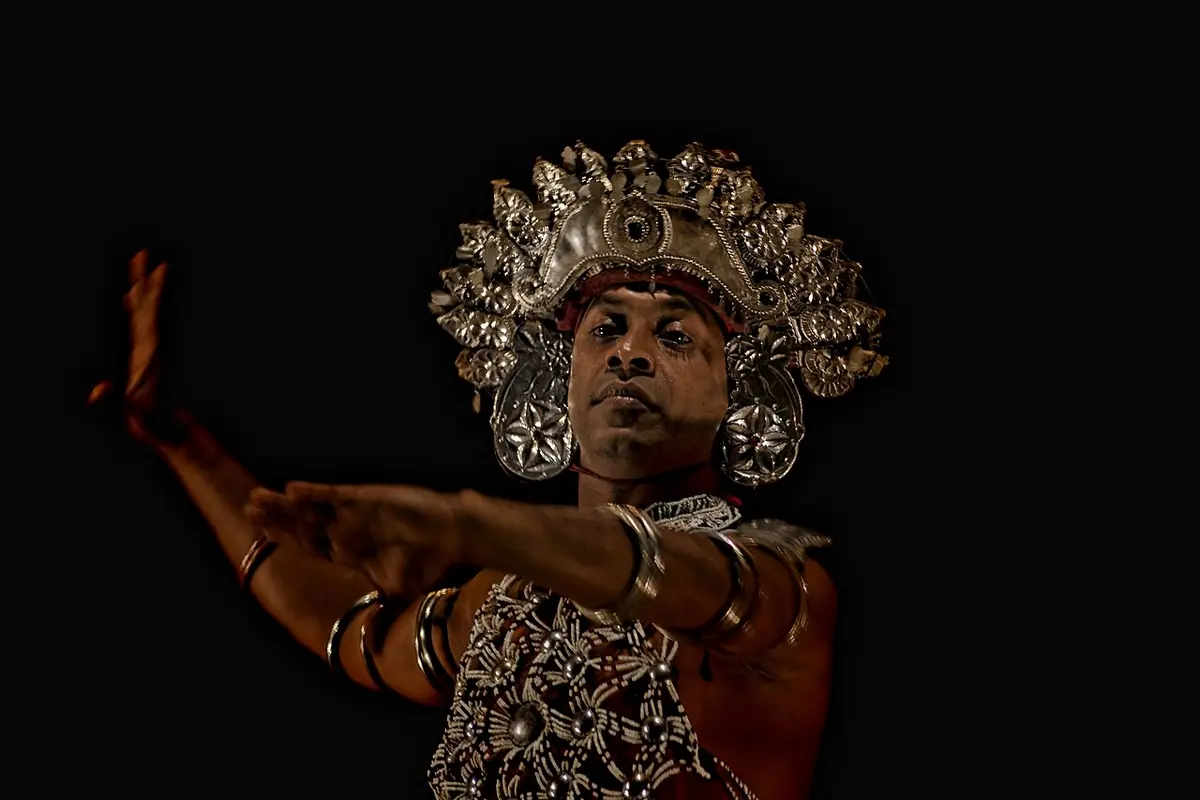
The Ves costume is elaborate. The chest is covered by a decorative beaded net, the headdress has a metallic front that makes the dancer look taller, and anklets rattle with each step. Traditionally the headgear is worn only by men, and only after a ceremony called the Ves mangalaya. Several schools now train women, though no definitive Ves costume exists for women. You will also see other costumes in a show, such as the oil-lamp bearers of Puja Natuma, which the venue describes as an offering of dance to the guardian deities.
Masks and fire in the programme
The Lake Club's own site describes more than Kandyan dance. Raksha Natuma is a southern mask dance in which the masks symbolise a fight between a cobra and a bird. Gini Sisila is a fire dance that includes fire-eating. The site explains fire walking through the story of Rama and Sita, in which Sita proves her chastity by walking barefoot on fire. Firewalking is practised in many places, and physics explains why a quick step on embers need not burn. Burns happen when people linger, so never try it yourself.
Getting there and back
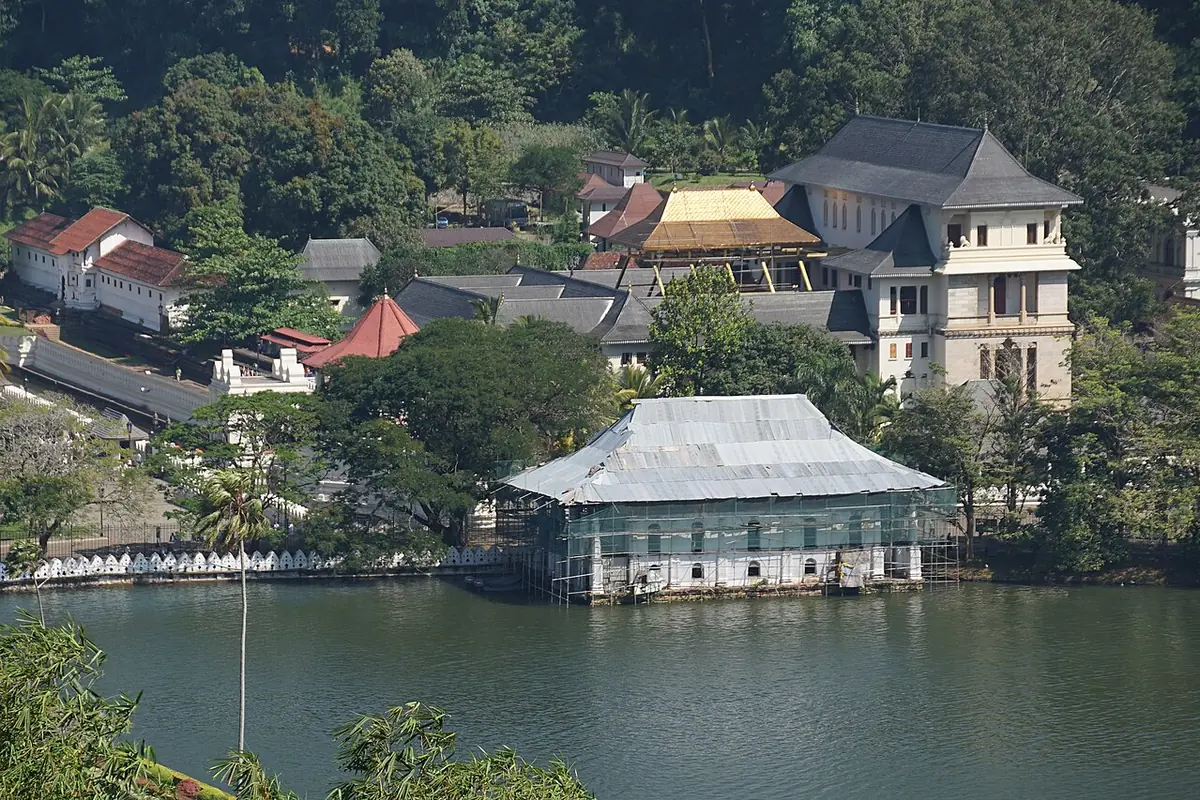
Kandy has a railway station with services to Colombo Fort, and the A1 road links Kandy with Colombo. Within the city, public transport is mainly buses run by private companies and the state transport board. The Kandy Lake Club has an address on Sangamitta Mawatha and offers free parking. Kandy Lake, a human-made lake in the middle of the city, is a useful landmark when you ask for directions. Save the street name and the map pin from your confirmation, and agree your ride back before the show starts. If you book a format that lists pickup and drop-off, check that your hotel falls within its area.
Timing, season and the Perahera
The show runs every day according to its website, so you are not tied to a season to see it. Kandy's climate is classed as tropical rainforest, so carry something for rain in any month. The Esala Perahera falls in July and August and follows the lunar calendar, so its dates move each year. The Lake Club announces earlier starts for the Perahera period, so check your booking calendar for those dates. The festival draws large crowds, so allow extra time for getting around town.
Read next: Kandy dance show: worth it, tickets
Dress, children, access and language
The show's site gives no dress code, so wear what is comfortable for sitting. If you add the Temple of the Sacred Tooth Relic, its official guidance says visitors in shorts, sleeveless or body-revealing clothing are not permitted, footwear is handed in at reception booths, and everyone is screened at the entrance. Offerings should not be brought in plastic bags. The venue says it is disability friendly; the temple offers a special service for people with special needs, arranged through its administration office. The Lake Club site does not state a children's policy or the show's language, so ask if either matters.
Who this isn't for
If you want to learn Kandyan dance, a show will not teach you; the tradition is passed on through schools and teachers. If you want an unmixed Kandyan performance, note that the Lake Club presents a wider repertoire, with southern mask and fire dances. If you want ritual in its own setting, the Kohomba Kankariya is rarely performed now, and the traditional form is still performed each year at the Dalada Perahera in Kandy. And if loud drumming or open flame bother you, choose another evening.
Frequently asked questions
What is Kandyan dance?
It is the group of dance forms native to Kandy and Sri Lanka's central hills, known as Udarata. It is traditionally accompanied by percussion alone, and Ves is the most popular form.
What are the Kandyan drums called?
The main drum is the geta beraya, which is used only in Kandyan dance. Other instruments include small cymbals called thalampota, the twin-headed thammattama played with cane sticks, and the small hourglass-shaped udekki.
How long is the Kandy Lake Club show?
The venue says one hour. A booking page may state a longer total time if it adds transport or arrival. Check the duration on the page you book; the start time is on your booking calendar and confirmation.
What should I wear?
The show's site gives no dress code, so wear what is comfortable. If you add the Temple of the Tooth, its official guidance bans shorts, sleeveless and body-revealing clothing.
Is the fire walking real?
The show's site lists fire walking and a fire dance with fire-eating among its performances. Firewalking is a real practice in many cultures. Physics explains why a quick step need not burn, but it carries real risk.
Can women perform Kandyan dance?
Yes. Several schools now train women, though no definitive Ves costume exists for women. Traditionally the Ves headdress is worn by men after a ceremony called the Ves mangalaya.
Sources