Tickets, options and how to choose
Kandy dance show: worth it, tickets
Is the Kandy Lake Club cultural show worth booking, how to buy a seat, what to check before you pay, and how it compares with other Kandyan dance evenings.
Check dates and availability ↗Quick answer
Yes, if you want an hour of live Kandyan dance, drumming and fire in a theatre, and you accept that it is a staged show for visitors, not a temple ritual. Book ahead for the date you want, choose the format whose inclusions match how you will get there, and check the booking calendar and your confirmation for the start time. Skip it if you want ceremony rather than performance, or if loud drumming and open flame are not for you.
Three ways to see Kandyan dance in Kandy
| Lake Club show | Cultural Centre | Esala Perahera | |
|---|---|---|---|
| Format | Stage show | Auditorium showcase | Street procession |
| Runs | Every day | Daily | July and August |
| Fire | Fire dance, fire walking | Check with venue | Fire dances featured |
| Best for | A varied first evening | Dance and music focus | A festival atmosphere |
Short answer: who should book
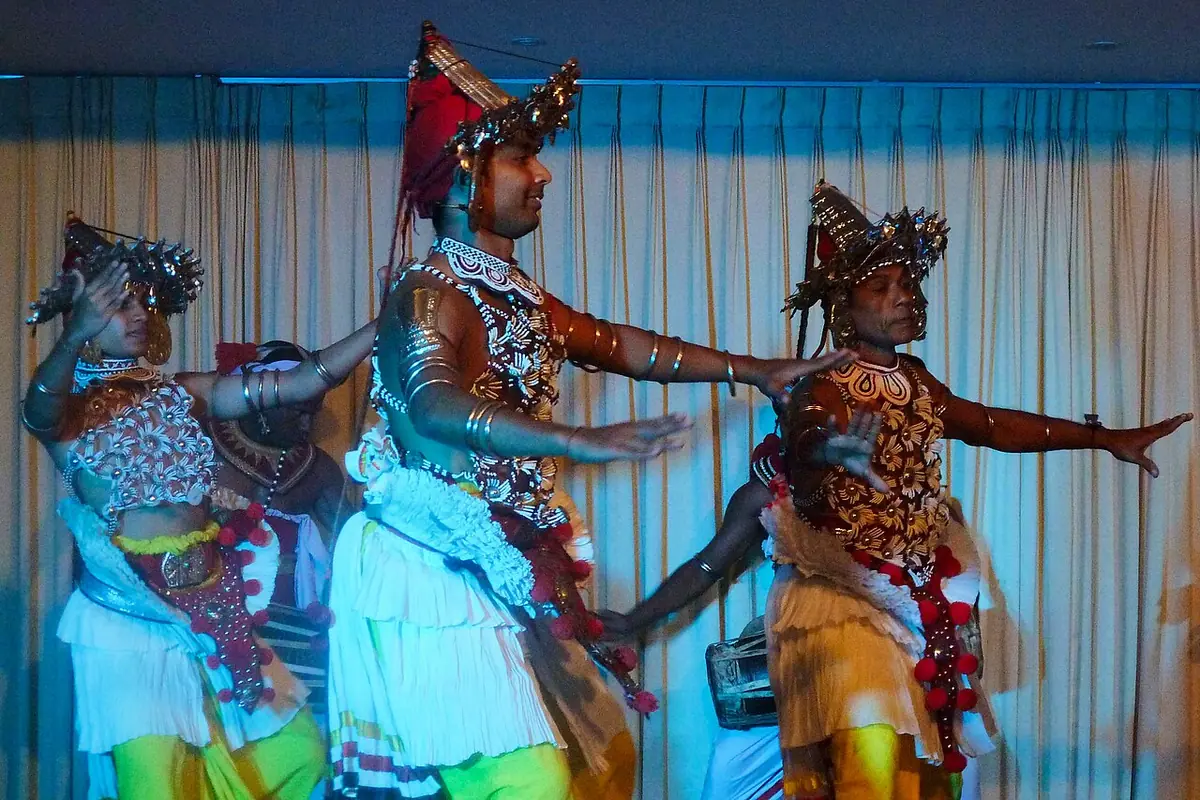
Book it if you want an hour of live dance, drumming and fire in one sitting and you are happy with a staged show made for visitors. It suits a first evening in Kandy, families who like colour and noise, and anyone who wants to see Kandyan costume up close. The show describes itself as a cultural dance performance that brings Sri Lanka's dance styles onto one stage, so you get a sampler rather than one tradition performed in full. If you want a ritual in its own setting, the Temple of the Sacred Tooth Relic holds its own daily services, which are a different thing.
What the Kandy Lake Club show is
The Kandy Lake Club Cultural Show says it began in 1982 and was the first cultural dance performance of its kind in Sri Lanka. Its stated aim is to bring the country's traditional dance styles onto one stage, from Kandyan dances to low-country performances. Its programme lists Ves Natuma, the Kandyan dance in sacred Ves costume, Raksha Natuma, a southern mask dance, Puja Natuma, with oil lamps, Raban Natuma, with a drum-like instrument, and Kulu Natuma, a harvest dance. It also lists a fire dance with fire-eating, and fire walking. The list is not tied to particular dates, so treat it as the repertoire, not tonight's running order.
Booking: your date and your seat
The show's own website has a booking form that asks for a date, your name and email address, and a seat choice. Its page does not state ticket prices or a cancellation policy, so ask before you pay anything you cannot get back. Booking platforms sell other formats, such as admission on its own or a ticket with transport. They differ in what they include and in their refund terms, so read both before you choose. If you book direct, keep the confirmation with your date and seats. This guide quotes no prices; the booking page shows the current price for your date, in your currency.
Choosing a format
Choose by how you will get there and what else is in your evening. If your hotel is in town and you are happy to arrange a driver, admission alone is the simple choice. If you are staying outside Kandy, or you would rather not organise a ride back afterwards, look for a format that lists pickup and drop-off. Read every line of the inclusions and exclusions, including food, drinks and water, because they vary between listings. Pick your date first, then check the details for that date.
- Admission only: you arrange your own way there and back
- With transfer: look for pickup and drop-off in the inclusions
- Bundled with a Kandy tour: check which parts are actually included
Why this guide gives no start time
The show's own website gives a standard daily slot, and it announces an earlier start during the Esala Perahera period. Booking platforms show times by date. Because the time can change, this guide does not repeat a clock time. Your booking calendar and your confirmation show the time for your date. Build the evening from that: if the show is your main plan, fix it first and add the temple or dinner around it, not the other way round.
Lake Club or the Kandyan Cultural Centre?
Kandy has more than one venue for traditional dance. The Kandyan Art Association runs a cultural centre on Sangaraja Mawatha with a daily one-hour showcase of Kandyan dance and music in its auditorium. The Association dates from 1882; the Lake Club show dates from 1982. Both programmes can change, so check each venue's current offer before you decide. The Lake Club's own list stresses a mix of Kandyan and low-country dances, with fire dancing and fire walking. Both present traditional Sri Lankan dance, so for most visitors one show is enough, and the choice comes down to programme and location.
During the Esala Perahera
The Kandy Esala Perahera is an annual procession held in July and August, timed by the lunar calendar. It features Kandyan drummers and dancers, fire dances and elephants, and it is held to pay homage to the Sacred Tooth Relic. The Lake Club's website announces an earlier start during the Perahera period, so check the booking calendar for those dates. The festival draws large crowds, so allow extra time for getting around. The procession and the stage show present related traditions in different ways, and neither replaces the other.
What it is, and what it isn't
This is a performance made for visitors. Kandyan dance has roots in ritual. After the Kandyan kings stopped supporting dancers in the British period it declined, and it was later revived and adapted for the stage; the stage show is the form most visitors meet. That is not a flaw, but it means you are watching a presentation, not a ceremony. The Lake Club says it mixes Kandyan and low-country styles, so expect a varied programme rather than a deep study of one form.
Read next: Kandyan dance: what you see and hear
Before you go
The venue lists free parking, free Wi-Fi, a boutique and a cafe, and says it is disability friendly. Its site does not state a dress code or a policy for children, so ask the venue or check your booking terms. The programme includes loud drumming and open flame, which suits some children and not others. The site is available in several languages, but it does not say which language the show is presented in, so check the booking page if that matters to you.
Read next: The dance show and the Temple of the Tooth: one Kandy evening
Who this isn't for
Skip it if you want a religious ceremony. This is a stage show, and the temple's own daily services are the ceremonies. Skip it if loud percussion, crowds or live fire bother you. If you want a big modern production, this is not it: the venue describes a programme of traditional dances. And if your time in Kandy is short, the temple and the lake may deserve the slot first.
Frequently asked questions
Is the Kandy Lake Club cultural show worth it?
Yes, if you want a varied hour of Sri Lankan dance, drumming and fire. It is a staged show for visitors, so it will not feel like a ceremony. If you want ritual or a large modern production, choose something else.
Do I need to book in advance?
You can book online ahead, and the show's own form lets you choose seats. Its site does not say whether walk-ups are taken, so booking ahead is the safe route if your itinerary is fixed.
What time does the show start?
Your booking calendar and confirmation show the time for your date. The show's own site gives a standard daily slot and announces earlier starts around the Esala Perahera, so do not rely on a remembered time.
Is fire walking part of every show?
The show's site lists fire walking and a fire dance with fire-eating among its performances. It does not say every item runs at every show, so treat them as likely, not guaranteed.
Is the show suitable for children?
The venue's site states no child policy. The programme has loud drumming and open flame, which suits some children and not others. Ask the venue, or read your booking terms, about age rules.
How is it different from the Temple of the Tooth ceremonies?
The show is a staged programme of dances. The temple's services are worship, held several times a day at the temple itself. They are separate visits, and the temple has its own dress and entry rules.
Sources